Untold stories, chaos and legendary tales from mountain bike icon, Hans Rey!
Mountain Bike pioneer, adventurer, former Trials World Champion, Hans ’No Way’ Rey will reveal the crazy and wacky that accompanied him on some of his adventures., with many career highlights and some never-seen-before footage and photos.
Puffy rolling hills clothed in olive trees are flushed in golden light. Shadow time projects the long black wings of falcons circle high above the parched earth. The only sounds are those of tires gently rolling along a dirt road leading to a house named after the birds flying overhead, ‘Podere il Falco”.
“Three decades ago, this 300-year old farmhouse was my home,” explains Hans Rey. “I had olive trees, a vineyard, a forest, and 70 acres covered with singletrack. At that time, although I was super busy traveling the world with my bike, I did wonder how much longer my career as a professional mountain biker would continue. So once upon a time, I dreamed about a life based in Italy, and I had a soft exit plan.” Hans fell in love with the Italian culture and the simple country life.
Disentis Sedrun Tourism is happy to announce a new partnership with international mountain bike legend Hans Rey. Rey will act as an ambassador and consultant for the Swiss mountain resort. The Swiss trials, freeride and adventure pioneer lives in California. He has inspired generations of bikers and has travelled to over 70 countries in his long career. Hans “No Way” Rey is an icon in the mountain bike world, the former Trials World Champion and Mountain Bike Hall of Fame inductee has been involved with many trends in the sport and has helped to put many MTB destinations on the map.
Rob Warner joins Hans Rey in exploring Mexico City on e-bikes in a high octane 5-day traverse of this mega metropolis. Along with their crew, local guide Mau de Avila was along for the ride (DABCO). Watch this 40-minute documentary as they hit some incredible lines at a trail center on the fringes of a city packed with 20 million people, skirt the crater of a high-altitude volcano for the ultimate descent and are awed by the pyramids at Teotihuacan. Take a Birdseye view as they embark on the ultimate joy ride visiting famous landmarks throughout the city and some sketchy neighborhoods too. Take in the color, culture, history, nature and the ever-growing mountain bike scene in Mexico. There is no shortage of one-liners and classic Warner commentary as well as some beautiful trails and a little giving back to the less fortunate. A film by No Way Productions & Cedric Tassan.
Produced & Directed: No Way Productions
Filmmaker: Cedric Tassan / VTOPO
Photo Credit: Carmen Rey
DISCOVER THE PROGRAM OF THE GREATEST BIKE WEEK-END IN LIVIGNO
Mountain bike enthusiasts return to gather on the trails of Carosello 3000 for a new edition of the Great Days scheduled from 29th to 31st July 2022. The program edition includes lots of riding, great opportunities for socializing, parties with live music, and the famous bike-game Tutti Frutti Challenge. Also, the news of 2022: the adrenaline-filled top-to-bottom Tk Avalanche.
Urban MTB Adventure w Hans Rey & Brett Tippie in San Francisco - Premiere
Slay The Bay is the latest destination for Hans Rey on his urban mountain bike adventure quest. During his 5 day traverse of the San Francisco Bay area he was joined by Freeride pioneer Brett Tippie. On the first stage in Marin County they got to ride the famous Repack Downhill with some of the original Klunkers; and on the last day they were joined by the current Junior Downhill Word Champion, Jackson Goldstone. In between they got to ride some of the best trails in the area and also explore this unique California city with its famous landmarks and diverse neighbourhoods. Highlighting some of the Bay City’s culture, history and amazing nature surrounding this concrete jungle while riding both their mountain bikes and ebikes.

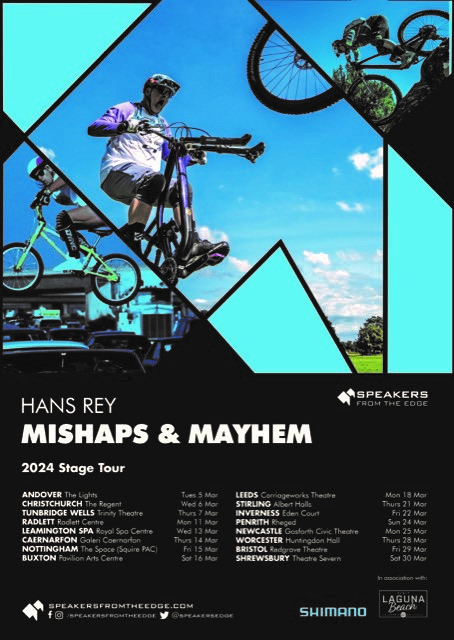 Untold stories, chaos and legendary tales from mountain bike icon, Hans Rey!
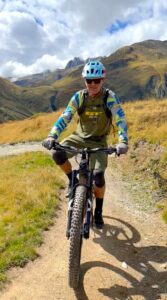 Disentis Sedrun Tourism is happy to announce a new partnership with international mountain bike legend Hans Rey. Rey will act as an ambassador and consultant for the Swiss mountain resort. The Swiss trials, freeride and adventure pioneer lives in California. He has inspired generations of bikers and has travelled to over 70 countries in his long career. Hans “No Way” Rey is an icon in the mountain bike world, the former Trials World Champion and Mountain Bike Hall of Fame inductee has been involved with many trends in the sport and has helped to put many MTB destinations on the map.
 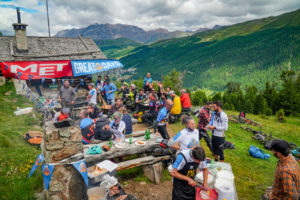 Mountain bike enthusiasts return to gather on the trails of Carosello 3000 for a new edition of the Great Days scheduled from 29th to 31st July 2022. The program edition includes lots of riding, great opportunities for socializing, parties with live music, and the famous bike-game Tutti Frutti Challenge. Also, the news of 2022: the adrenaline-filled top-to-bottom Tk Avalanche.